Free Charlie Brown Theme Song Piano Sheet Music Easy
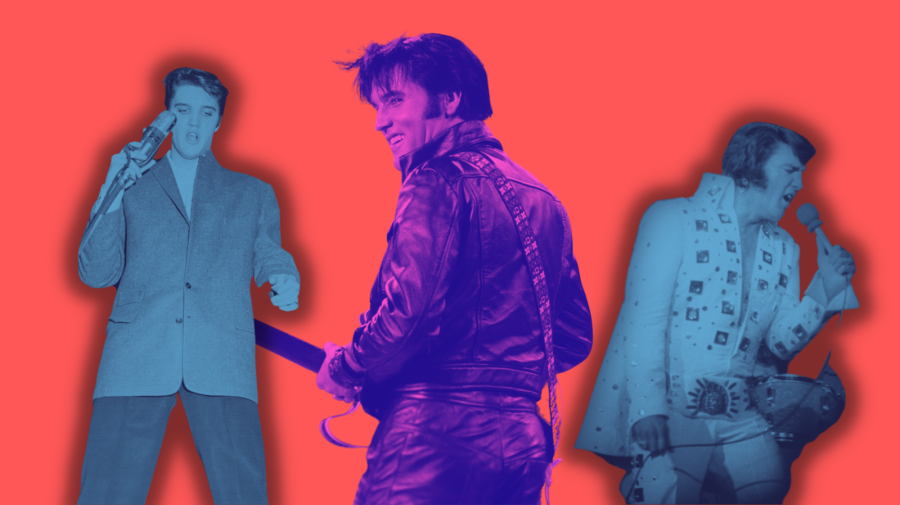
Elvis, director Baz Luhrmann'due south latest film and his first since 2013's The Great Gatsby, comes out this week in the U.S. It promises to be an incredibly exciting flick experience, telling the story of Elvis Presley's life and career using the heavy doses of style and frenetic energy Luhrmann's films are famous for — think Moulin Rouge! (2001) and Romeo + Juliet (1996).
But it makes sense that a blockbuster biopic about Elvis would be larger than life, because that'south exactly what Elvis was throughout his career. Although he died in 1977 at but 42 years old, his career seems like five in 1. He had hits in the genres of popular, country, gospel and R&B while simultaneously coming to be known to future generations as "The Male monarch of Stone and Gyre."

Information technology's strange to say, merely sometimes what gets lost in the shuffle when we await back on the rollercoaster of Elvis' career is the songs. It'due south easy to focus on the armed forces stint, the many movies he made in the '60s, the leather jackets and his downfall in the centre of the '70s — all while forgetting that, the whole time, he was cranking out absolutely gorgeous vocal performances. Elvis was capable of being sexy, devout, passionate and melancholic. Sometimes all at once. He could crack open up your cold heart in a million ways.
In honor of Luhrmann's new picture show, which is sure to recontextualize Elvis Presley's life beyond the music itself, this feels like a good moment to get into the songs that were the bedrock of Elvis's career. So, let's wait at five quintessential Elvis songs to have you through the different eras of his music.
"That's All Right," 1954
The beginning unmarried Elvis recorded nigh never happened. Sam Phillips of Lord's day Records saw some hope in Presley, who was just 19 at the time, only the audition session Phillips set upwards didn't go well. Elvis — backed upwardly by Scotty Moore on guitar and Nib Black on bass — played lots of sentimental ballads, and seemed to lack confidence. So, in what seemed like a version of fooling around, Elvis loosened up and started playing an erstwhile blues vocal from 1946 by Arthur "Large Boy" Crudup.
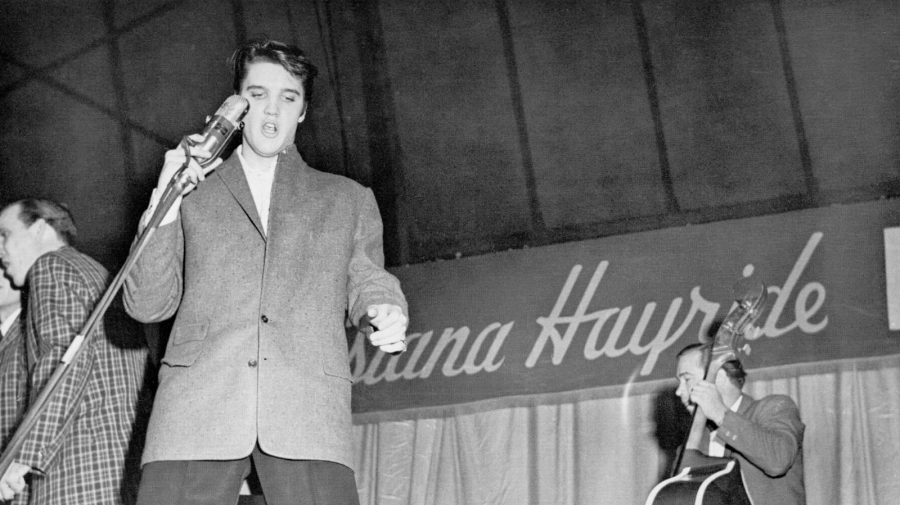
That song was "That's All Right," and the legend goes that Phillips immediately knew he'd plant the sound he was looking for. Elvis would say most the song, "To exist honest, we just stumbled on it," but it is, in miniature (information technology's less than ii minutes long!), so much of what would make Elvis bang-up.
On the song, Elvis' voice seems to lilt around the words as he's singing them. Despite the fact that information technology's a fun, upbeat song, there's an immediacy to his performance, equally though he's simultaneously singing his centre out and whispering sweetly in your ear. These qualities would go on to be hallmarks of Elvis' style for the rest of his career.
You lot can't trace Elvis' career without highlighting the importance of "Hound Dog." The vocal was written by i of the cracking songwriting teams of all time: Jerry Lieber and Mike Stoller. They were just 19 when they wrote the vocal in 1952 for Large Mama Thornton, whose incredible version of the song came out in Feb of 1953. Her version was a smash hit, and it made the song famous.
Lots of artists recorded the song in subsequent years, but in 1956 Elvis took a shot at it — he'd been familiar with Thorton's version, merely never considered trying it until he heard the version by Freddie Bong and the Bellboys, according to Lieber and Stoller. Hilariously, the songwriters weren't and so fond of Elvis' version — Mike Stoller would say after that, "She was singing to a man. And he was singing to a canis familiaris."
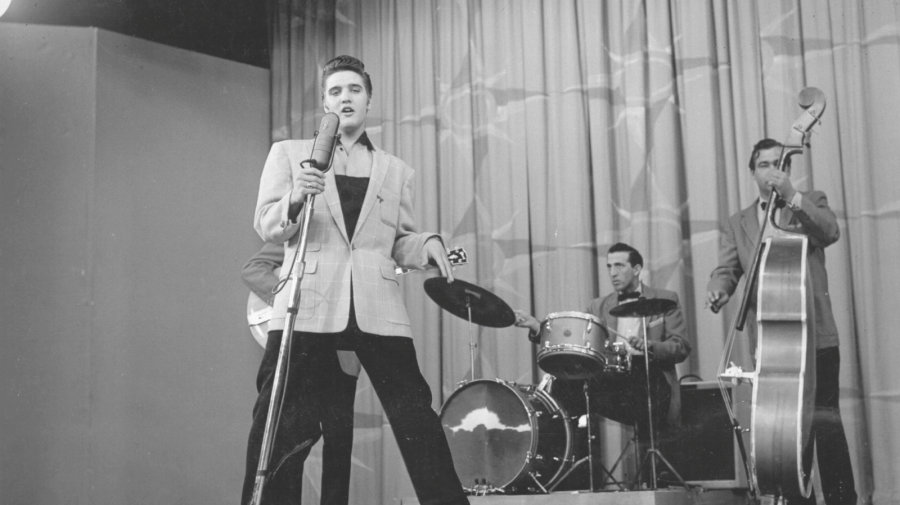
Nevertheless, the Elvis version would exist the one to become a touchstone in the history of American music. And even if Elvis' version doesn't contain the aforementioned poignancy of Thornton'southward version, it captures Elvis at his gritty, rockabilly best. The offset thing you hear on the song is his voice, similar it's already moving 100 miles an hour. He never lets get.
His performances of the vocal on Ed Sullivan and Milton Berle's Idiot box shows made him a bit of a scandal — he earned the nickname "Elvis the Pelvis" — simply they as well made him truly famous. "Hound Dog" would become his all-time-selling single in the U.S.
"Are Y'all Lonesome This evening?," 1960
Elvis recorded "Are You Lonesome This night?" in 1960, presently after his return from his two years in the armed forces. Elvis in the 1960s is a complicated figure — he starred in an endless stream of movies built around his popularity, and recorded countless songs for those films, merely much of the material feels commercial when you lot listen to it.
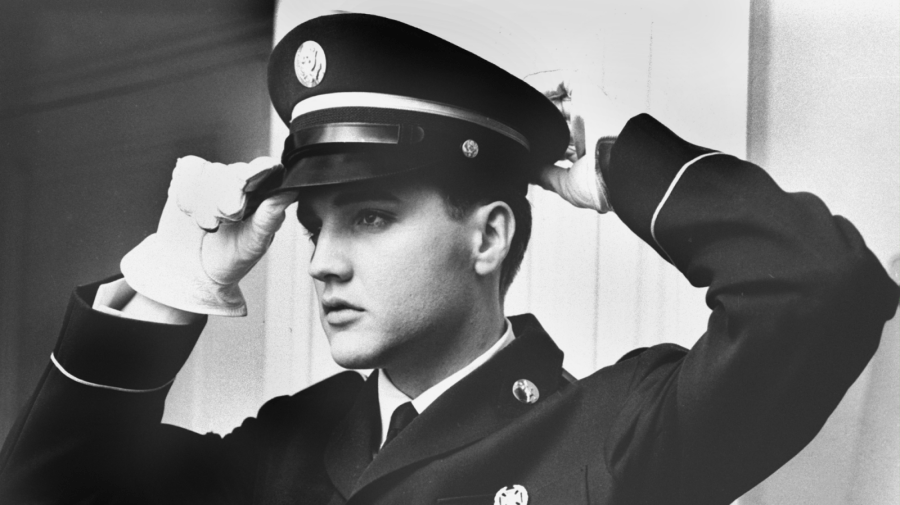
His recording of "Are You Lonesome Tonight?" is, on the other hand, one of the most beautiful recordings of all time. He captures the feeling of loneliness and contemplative sadness — the song feels similar a diary entry, a person lost in his own thoughts. And yet, you can't help but feel invited into the feel by his phonation.
Famously, this song would continue to be a huge part of his live performances, but he struggled with it in later years. Occasionally, he would forget the lyrics, and one time even started laughing during the spoken part toward the end of the song. Malcolm Gladwell, on his Revisionist History podcast, did a whole episode on the psychology of Elvis centered around this song, and what it means when an artist becomes emotionally engaged in material to such a strong degree.
The extreme versions of Elvis' struggles with "Are You Lonesome Tonight?" are a major part of his appeal subsequently all these years. With so many Elvis recordings, no thing how famous or familiar they've go, when you listen to them, you tin can forget everything else and just exist there in the vocal. It'due south a lot to feel, but that'southward one of the reasons nosotros listen to music in the beginning place.
"Suspicious Minds," 1969
Information technology'southward hard to imagine this now, only Elvis got kind of overexposed in the 1960s. Too many Hollywood films with too piffling real artistry behind them. So when Elvis fabricated a Telly special in December of 1968, it was considered a comeback. That special led to a new series of recordings and his 10th studio album in 1969: From Elvis in Memphis.
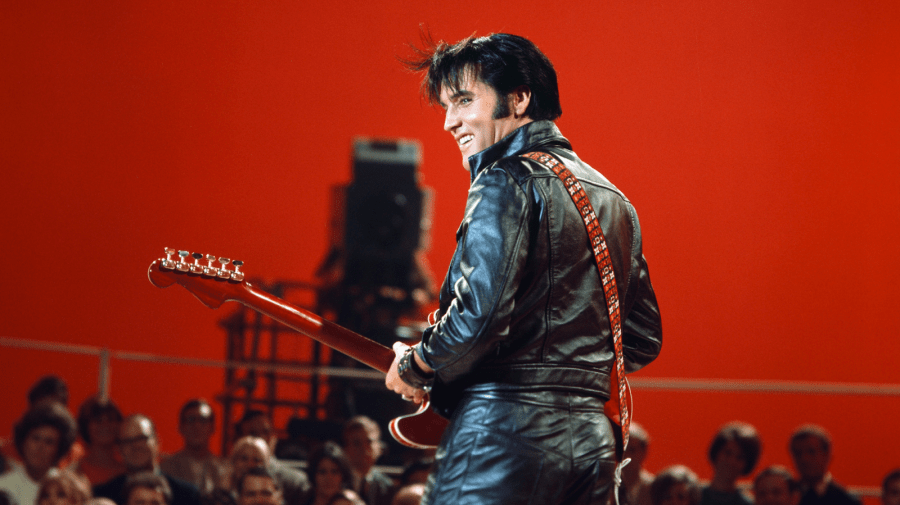
"Suspicious Minds" isn't on that anthology, but it was a single culled from the aforementioned sessions. Written and recorded the prior year past Mark James, the song wasn't a hit until Elvis got hold of it. In fact, "Suspicious Minds" was the last number one single Elvis would always have in the U.S.
And Elvis' version of the song is a really wild ride, to be certain. It'southward yearning and sincere, merely also totally over the summit, also. Y'all can hear the theatricality that would be a huge part of Elvis' stage persona over the final decade or so of his career, but it's as well but musically gorgeous, with syrupy guitars and booming orchestrations. If I had to choose one Elvis Presley vocal to play for someone to draw what makes him so swell, this would exist my pick.
"Burning Love," 1972
By 1972, things were going off the runway for Elvis, but his popularity was nevertheless at a peak. He won a Grammy for a gospel album, He Touched Me — his 2nd of iii Grammy wins, all for gospel recordings. In June of 1972, he released a live anthology, Elvis: As Recorded at Madison Square Garden, that was as well an enormous hit.
Unfortunately, his matrimony was falling apart during this fourth dimension, and later on it was over he'd never really be the same. "Burning Love" came out in August of 1972, only he'd recorded it in March, just weeks afterwards he and Priscilla, his quondam wife, separated. Information technology's actually his last great single — a rollicking smash of a song, full of his trademarked combination of sincerity and over-the-elevation operation.
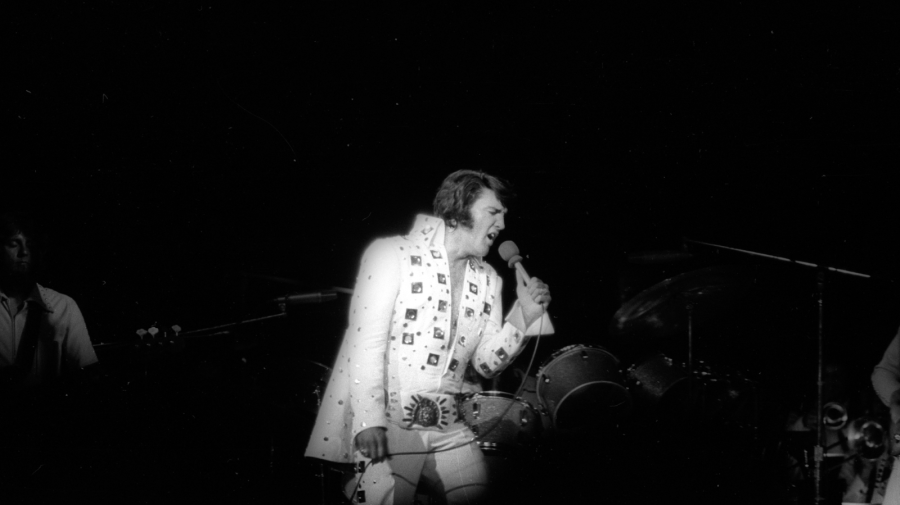
Written by Nashville songwriter Dennis Linde, it was first recorded by Arthur Alexander earlier in 1972, but Elvis' version is the archetype one. Listening to it now, it's difficult not to hear his desperation in the performance. In the middle of the song he delivers the lyrics, "Won't you help me? I feel like I'k slipping abroad." His vox trails off; he truly embodies the meaning of the words themselves.
And I guess that'due south what I find myself thinking about almost when I call back about Elvis — the manner he, as a performer of songs written by other people, was able to make those songs entirely his own through his singular voice and estimation. Elvis' life tin experience a lilliputian flake strange and untouchable at times. He's such a legend that he barely seems real. Just that's why it's great that we still take the songs — where he'south present, immediate and timeless forever.
Source: https://www.ask.com/culture/elvis-presleys-music-in-5-songs?utm_content=params%3Ao%3D740004%26ad%3DdirN%26qo%3DserpIndex&ueid=e39ce7aa-7582-4f73-b8fa-dfcd5276ba9d
0 Response to "Free Charlie Brown Theme Song Piano Sheet Music Easy"
Post a Comment